PANACEA BIO CHEM · ENDOTHELIAL REPAIR RESEARCH
The vascular system is protected by an interface only micrometres from the blood. What happens when that interface is damaged?
Sulodexide is a purified biological complex composed principally of a rapidly migrating heparin-like glycosaminoglycan fraction and dermatan sulfate. Its scientific importance extends beyond conventional descriptions of anticoagulation. Published research has investigated its relationships with the endothelial glycocalyx, vascular permeability, antithrombin activity, heparin cofactor II, fibrinolytic balance, inflammatory signalling, nitric-oxide-dependent vascular function and extracellular-matrix biology. At Panacea Bio Chem, Bogdan Dicoias is investigating sulodexide as a possible foundation for a wider vascular-repair programme: one centred on preserving and restoring the molecular interface between circulating blood and the endothelium. Sulodexide is commonly described as approximately 80% fast-moving heparin fraction and 20% dermatan sulfate. Its two principal components interact with different endogenous anticoagulant systems, while published human and experimental studies have also investigated endothelial glycocalyx dimensions and vascular function.
An active independent Panacea Bio Chem research programme led by Bogdan Dicoias.
Sulodexide is an established non-proprietary pharmaceutical substance. Panacea Bio Chem’s programme represents an independent investigation into its mechanisms, formulation and future vascular-repair potential.
WHAT IS SULODEXIDE?
A biological glycosaminoglycan complex
Sulodexide is not one small uniform molecule. It is a purified glycosaminoglycan complex, commonly described as approximately 80% fast-moving heparin-like fraction and 20% dermatan sulfate.
The heparin-like fraction shows affinity for antithrombin III; dermatan sulfate interacts with heparin cofactor II. Its profile involves anticoagulant and antithrombotic pathways — and its published research extends into glycocalyx biology, vascular permeability, endothelial inflammatory signalling, fibrinolytic balance, nitric oxide, vascular relaxation, extracellular-matrix turnover, matrix metalloproteinases, microvascular function, renal filtration barriers, chronic venous disease and vascular injury following infection.
It has been studied in oral and parenteral forms internationally; availability, authorisation and indications vary by country. This website is not a prescribing service and contains no dosage instructions.

Bogdan Dicoias — Panacea Bio Chem Ltd
THE RESEARCHER
Bogdan Dicoias on sulodexide and vascular repair
Sulodexide should not be viewed only through the narrow definition of an anticoagulant. Its components interact with the biochemical architecture that separates circulating blood from the vascular wall.
The endothelial glycocalyx, coagulation, fibrinolysis, inflammation, permeability and vascular signalling are not isolated systems. They are parts of one molecular interface.
At Panacea Bio Chem, we are investigating sulodexide from that wider perspective: not merely as an established substance, but as a starting architecture for endothelial protection, vascular restoration, formulation science and future molecular-repair technologies.
I expect this programme to produce important observations and new technological directions in the near future.
THE ENDOTHELIAL GLYCOCALYX
The molecular border between blood and tissue
The endothelial glycocalyx is a gel-like layer on the blood-facing surface of the endothelium. It contains glycosaminoglycans, proteoglycans, glycoproteins, heparan sulfate, chondroitin sulfate, hyaluronan, membrane proteins and bound plasma components.
It participates in permeability control, mechanotransduction, nitric-oxide signalling, leukocyte adhesion, platelet interaction, coagulation regulation, fluid exchange, endothelial protection and inflammatory control. When it is damaged or shed, the endothelial surface is exposed.
Published human research in people with type 2 diabetes reported changes in measured sublingual and retinal glycocalyx dimensions following oral sulodexide administration. This was a limited mechanistic study and must not be described as proof that sulodexide universally regenerates the human vascular system.
The glycocalyx is not decoration on the endothelium. It is part of the vascular organ.
DUAL GAG ARCHITECTURE
Two fractions. Multiple regulatory systems.
Fast-moving heparin-like fraction
The principal fraction, with an antithrombin III relationship and activity against coagulation proteases. Its heparan-sulfate-like character and endothelial-surface glycosaminoglycan relationship make it a candidate contributor to the glycocalyx hypothesis.
Dermatan sulfate
The second fraction, interacting with heparin cofactor II and participating in thrombin regulation, with extracellular-matrix relevance and a complementary role in the complex’s overall profile.
Sulodexide’s scientific identity lies in the interaction of two glycosaminoglycan fractions rather than one isolated pharmacological action.
BEYOND “BLOOD THINNING”
Sulodexide cannot be accurately explained in two words
Calling sulodexide a “blood thinner” removes most of its scientific interest. Its published pharmacology spans coagulation factors, endogenous serine-protease inhibitors, thrombin regulation, fibrinolytic pathways, endothelial cells, glycocalyx structure, permeability, inflammation, nitric-oxide signalling and matrix biology.
Sulodexide is best investigated as a vascular-interface modulator rather than reduced to one pharmacological label.
Sulodexide can affect coagulation. Nothing on this site suggests freedom from bleeding risk or casual combination with anticoagulant, antiplatelet or injectable treatments.
SULODEXIDE INSIDE THE PANACEA TECHNOLOGY UNIVERSE
One research programme inside a connected technology ecosystem
The Sulodexide programme does not exist in isolation. It draws on Panacea platforms for formulation, preservation, delivery, synthesis and molecular repair — and shares their laboratory and engineering environment.
RESEARCH WATCH
Sulodexide & Glycocalyx Watch
Last updated: 2026-08-23
2026-08-22
Evaluating the endothelial glycocalyx from bench to bedside: a translational framework for microvascular assessment
sulodexide & glycocalyx watch
1. Angiogenesis. 2026 Aug 22;29(4):65. doi: 10.1007/s10456-026-10084-2. Evaluating the endothelial glycocalyx from bench to bedside: a translational framework for microvascular assessment. Tomita H(#)(1)(2), Suzuki A(#)(3), Okada H(#)(4)(5).
Peer-reviewed review
2026-08-20
Hyaluronan deficiency disrupts endothelial glycocalyx integrity and contributes to age-related arterial dysfunction
sulodexide & glycocalyx watch
1. Geroscience. 2026 Aug 20. doi: 10.1007/s11357-026-02464-9. Online ahead of print. Hyaluronan deficiency disrupts endothelial glycocalyx integrity and contributes to age-related arterial dysfunction.
Peer-reviewed study
2026-08-25
Indwelling inferior vena cava filter as a persistent thrombotic risk factor: recurrent venous thromboembolism after anticoagulation withdrawal
sulodexide & glycocalyx watch
1. Blood Coagul Fibrinolysis. 2026 Aug 25. doi: 10.1097/MBC.0000000000001451. Online ahead of print. Indwelling inferior vena cava filter as a persistent thrombotic risk factor: recurrent venous thromboembolism after anticoagulation withdrawal. Szabóová E(1), Matĕjka J(2), Dekanová L(1), Hudák M(1), Molnár T(3).
Peer-reviewed study
2026-07-14
Proteomics-based clustering for higher risk of venous thromboembolism in patients with nephrotic syndrome
sulodexide & glycocalyx watch
1. Res Pract Thromb Haemost. 2026 Jul 14;10(5):106855. doi: 10.1016/j.rpth.2026.106855. eCollection 2026 Jul. Proteomics-based clustering for higher risk of venous thromboembolism in patients with nephrotic syndrome. Liu X(1), Ma J(2)(3), Lyu Y(4), Zhang X(2)(5), Song W(4), Yang P(4), Zhai Z(2)(6), Fan G(7), Wang D(7).
Peer-reviewed study
Research and practice in thrombosis and haemostasis via PubMed ↗
THE PANACEA TECHNOLOGY UNIVERSE
Twenty-four technologies, each the leader of its class
Proprietary Panacea Bio Chem Ltd technologies, invented by Bogdan Dicoias — what each one does, and why it leads its class.

Lyoprester®
The only dual-chamber cartridge that is autoreconstitution-enabled, vacuum-sealed and argon-fillback.
Cake and liquid never meet until the moment of use — no contamination, no transfer, no compromise. A conventional vial wets only the surface; the Lyoprester carries Peptourbillon loads approaching 200 mg.
Lyoprester SS: screw a needle, inject, throw.

P-EARLs™
Panacea-Engineered Aseptic Reconstitution Liquid(s) — each tuned to the peptide it wakes.
Bacteriostatic water is a fine diluent and nothing more. A P-EARL is engineered around the peptide’s pI-aggregation behaviour and its Met/Cys/His/Trp oxidation profile.
GHK-Cu: a chelation-withholding liquid design, not generic water.

Peptourbillon™
The layered peptide formulation architecture — single- or multi-layer, never a blend.
Each active keeps its own lyophilised phase: near-eutectic layering, ultrasound freezing, −80 °C stack, RF-assisted drying. Chemistries that would destroy each other in a blend arrive as neighbours, not mixtures.
Dual-layer cakes: one active below, a second above — one chamber, zero contact.
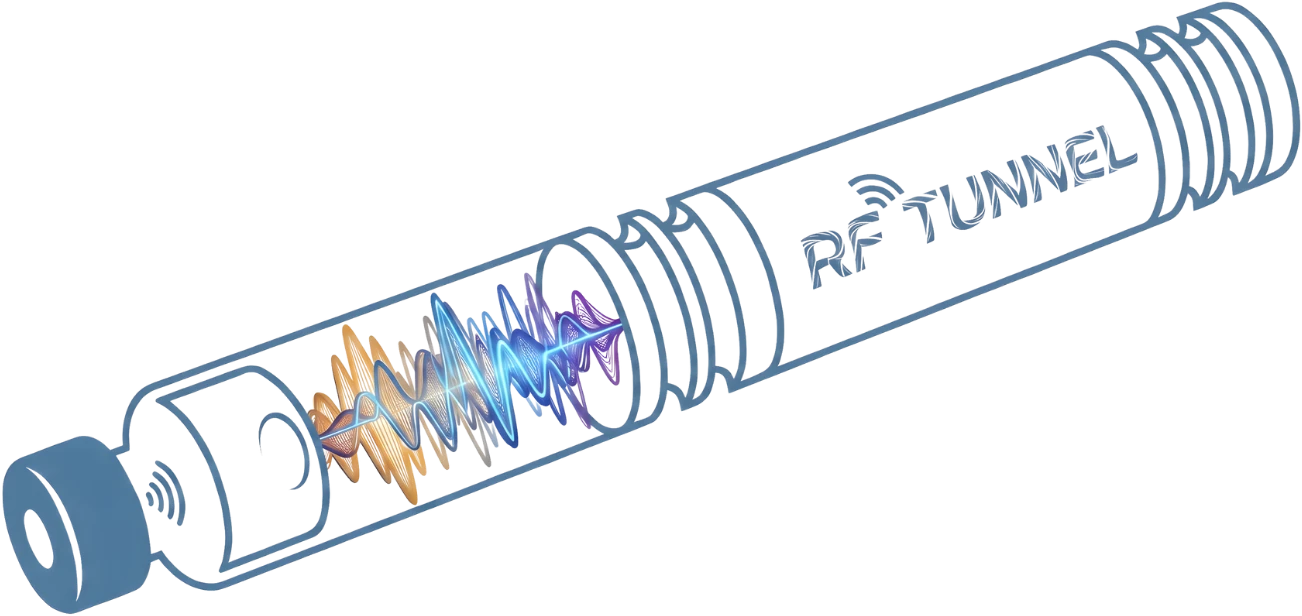
RF Tunnel™
The RF-formed central channel through the cake.
Two wetting fronts instead of one — reconstitution solved by geometry, not surfactants.
The hard cases: heavy-loaded, lipidated (GLP-class) and gel-blocking APIs.

TgShift™
Raises the cake’s glass-transition temperature with RF — instead of chilling below it.
Drying runs warmer and faster while the structure stays below collapse — cycles shorten from days toward hours.
Reference points: trehalose ≈ −29 °C, sucrose ≈ −32 °C — shifted upward, not endured.
Cryolapse™
Cryogenic pressure collapse — and the machine that pushes plungers and crimps.
Cryopumping to −110 °C pulls cycles from ~13 hours toward ~4, surfactant-free; the same machine enables ElimiVoid, IncreSure and Cryoviscous.
A 3× time compression on a real lyo cycle, without a surfactant in sight.

LyoLevit™
The cake levitates and spins in high orbit — driven by ultrasound and RF.
Zero-contact processing: 99% reproducibility, 89% energy reduction, a 4–6× gain in sublimation surface.
No shelf contact means no hot spots — uniformity is the mechanism, not the hope.

Lyochrysalis™
The integrated chamber housing the whole drying stack.
It finishes cold — it never cooks the peptide. No +40/+60 °C secondary bake, so binding affinity and bioavailability survive.
TgShift + LyoLevit + Cryolapse + DiastolVAC + S3Pulse in one housing.
S3Pulse™
The control brain for every piece of Panacea hardware.
Sixteen relay channels, three dipped product probes as the authority, Cryo-Triad event detection and a Kv-learning adaptive ramp — the only platform that enables every other technology.
14,909 automated contract tests stand behind the control law.

Liquiprester™
The single-liquid cartridge engineered so multiple peptide APIs coexist in one shared vehicle.
The glass may vary, the dose must not: a fixed plunger datum with ElimiVoid, bore-variance self-counterbalancing, and IncreSure verification per increment.
Dose accuracy that survives manufacturing tolerance — by design, not inspection.
Syntheseract™
Continuous-flow peptide synthesis in a special, very fast and economical way.
Batch synthesis is “more product, blindly”; Syntheseract is scalable production, observed — 64 positions, 128+ addresses, and a Digital Batch DNA for every run.
Sprint, Economy and Fortress modes — the economics chosen per peptide, not per habit.

CFSPPS™
Continuous-flow solid-phase peptide synthesis, written as its own category.
Setpoint ≠ experience: in flow, every residue addition is observed and repeatable instead of assumed.
The category reference the field reads before arguing.

OxyDeplete™
Degassing plus no-headspace doctrine — the oxygen-starved seal.
Trapped oxygen does not escape, it reacts. Remove it first and stability extends into years instead of months.
Air seal vs oxygen-starved seal: the comparison the oxidation model is built on.
ArgonLock™
The final inert-atmosphere lock under argon.
After drying, the cake is backfilled and sealed under argon — the principle that protects welding arcs, wine cellars and the Charters of Freedom, applied to peptides.
Air vs vacuum-only vs ArgonLock — the three-face comparison, settled.

RedoxVault™
Separation, not merely suppression — redox isolation in lipid micro-reservoirs.
A few ppb of iron can outweigh grams of antioxidant; the vault removes the catalyst from reach, with depot and delayed-release microsphere formats on top.
A strongroom at the scale of a droplet — the ferritin principle, engineered.

PleniDose™
The shared filling gantry — one machine filling both the dual-chamber Lyoprester and the liquid Liquiprester.
Only the rods holder changes between the two product lines; the rear-plunger datum is fixed and pen-compatible. The glass may vary — the dose must not.
Known inside the machine software as the Lyochrysalis Gantry: one gantry, two product lines.

IncreSure™
The dose-metrology layer — verified API per pen increment.
The printed “60 IU” dial figure is not the API in the cartridge and not the volume per click. IncreSure characterises seven real pen parameters instead of trusting the label — a Cryolapse-enabled discipline.
Piston travel per increment: measured, never assumed.
ElimiVoid™
Front-void elimination without touching the metered dose.
It removes the compressible air pocket ahead of the dose — without moving the rear plunger, without withdrawing API, without changing the delivered increment. A Cryolapse-enabled operation.
The completion liquid is API-free, buffer-free and engineered to stay out of the way.
Cryoviscous™
The characterised cold, high-viscosity, low-mobility conditioning state.
The formulation is held temporarily still — strongly flow-restricted — for precision cartridge filling, then recovers within acceptance criteria on controlled warming.
A processing state, not merely “cold liquid”.

Vana Machine™
Vacuum Assisted Needle Accessory — vacuum conditioning and plunger-locking for the cartridge.
It prevents air gaps and plunger drift, landing the target vacuum inside the Lyopresters and keeping it there until the moment of use.
The machine that vacuum-conditions the cartridge before it ever meets a needle.

EZnject™
The disposable auto-injector pen built around the Lyoprester.
One twist activates autoreconstitution — the P-EARLs is drawn into the peptide chamber at the septa. A hundred indexed 0.1 mL doses with lab-grade accuracy; ships with 31G/5 mm needles and a Peptourbillon pre-loaded.
One twist — no vial, no syringe, no transfer.

Dicoias Ψ
The computed-chemistry advisory — every substance reduced to a vector across physical, electronic and formulation space.
Structure-guided descriptors first, laboratory work second: the Ψ advisory ranks excipients, vehicles and layer candidates before the first bench run — the selection layer behind Panacea formulation decisions.
The molecule’s structure reads the shortlist before the bench hears it.

SealoPrester™
Aseptic Cartridge Closure System — Seal o’ Precision + Sterility.
It mechanically seals the caps of vacuum-charged, argon-locked cartridges that arrive held together by vacuum alone — one wrong move and the cartridge self-reconstitutes or loses its atmosphere. In cahoots with VANA, it gives birth to the Lyoprester.
The machine that turns a banal dual-chamber cartridge into a Lyoprester.

Peptidic Liquid
The peptide formulation in solution — the active plus its buffers, cryoprotectants, lyoprotectants and scaffolders.
A peptide is only as good as the liquid it lives in: this is the formulation that decides whether a dose survives freezing, drying, storage and the journey back to solution. Designed with Dicoias Ψ.
The liquid every Lyoprester is born from and every Liquiprester keeps.
PANACEA BIO CHEM
The vascular interface may be repairable
Sulodexide connects glycosaminoglycan biology, endothelial protection, coagulation control, fibrinolysis and vascular permeability. Panacea Bio Chem is investigating what that architecture can become.